 |
Episcopes and epidiascopes |
||
|
|
|
 |
 |
 |
|
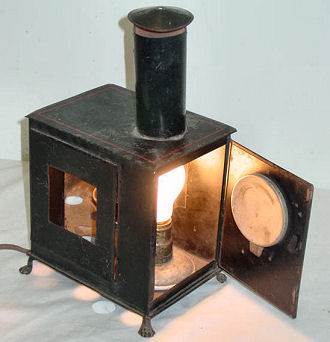 |
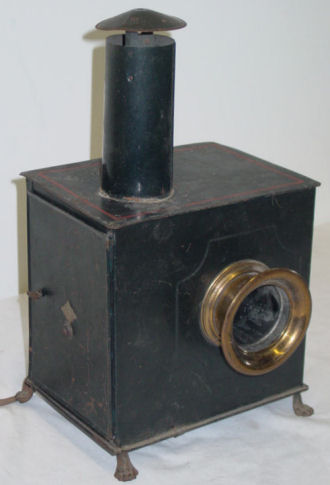
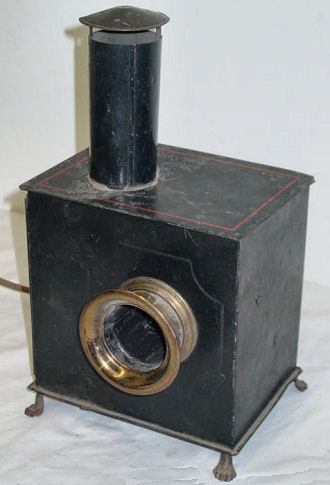
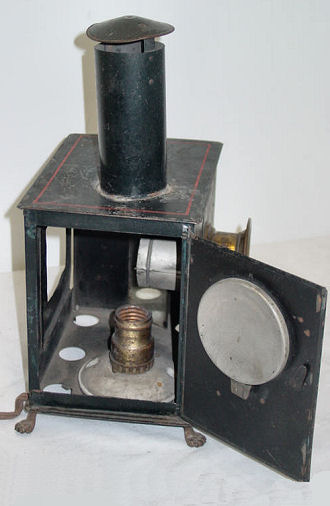
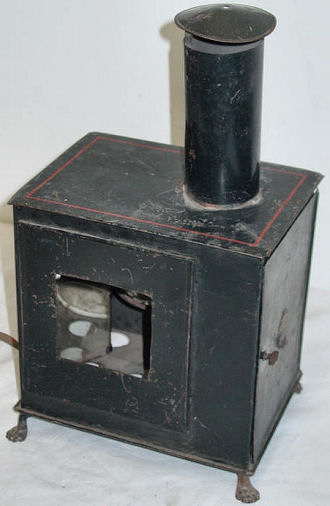
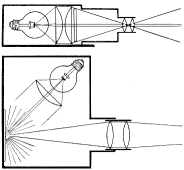
Simple
episcope, Gebrüder Bing, Nuremberg c. 1900. The postcard holder at the
back can be shifted aside, to reach the lamp. The light of the lamp is
reflected by a mirror inside. Japanned tin with a red painted piping and
a 'GBN Bavaria' emblem at the door. Dimensions: 13 x 7.5 x 6 inches (33 x 19 x 14.5 cm). |
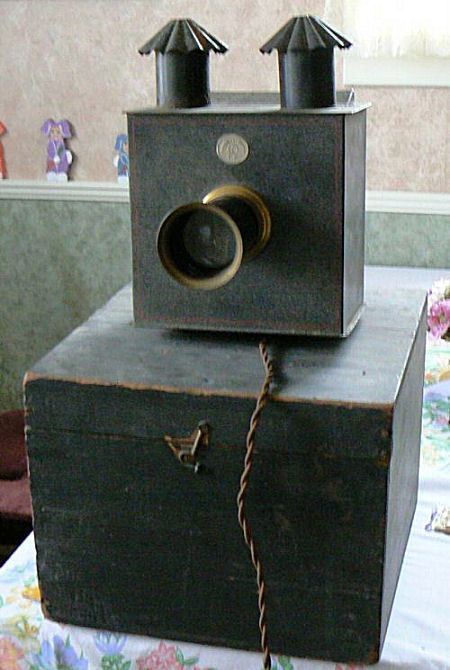 |
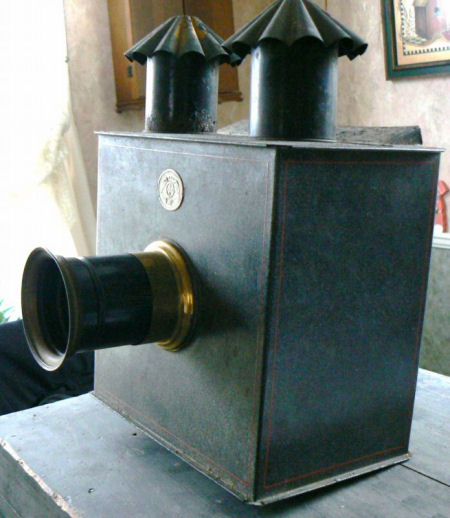 A similar design made by another Nuremberg manufacturer of magic lanterns Ernst Plank, complete with the accompanying wood box. |
||
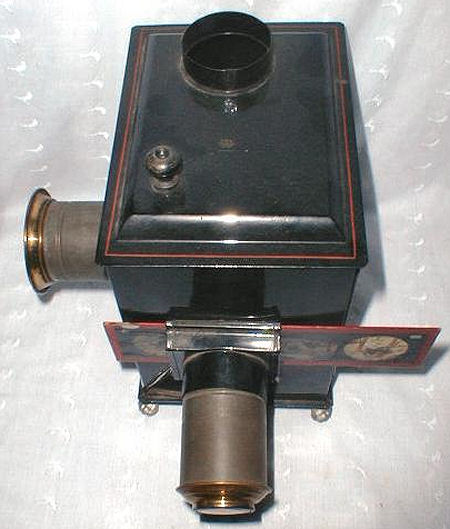 |
Combined
normal magic lantern and episcope, made by Gebrüder Bing,
Nuremberg. Inside a manoeuvrable mirror, adjustable from the top outside
by a fluted knob,
to lead the light of the
electric lamp through the lens of the lantern or via the opaque picture
at the back through the lens of the episcope.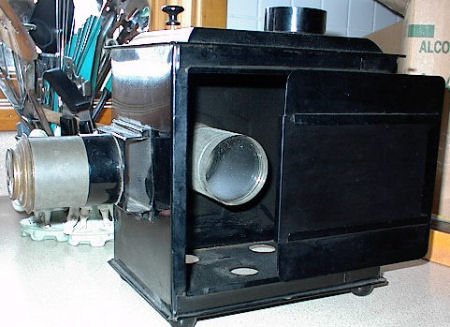 |
||
 |
|||
|
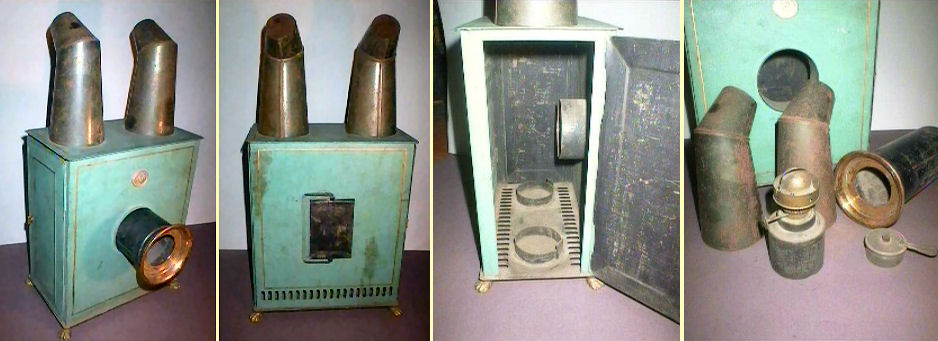
Vintage Ernst Plank
episcope. It measures approx. 17.75" tall x 9.5" wide x 6.5" deep (c. 45 x 24 x 16,5 cm). On the front is a silver coloured emblem, marked 'EP Germany" which makes it easy to determine the manufacturer as 'Ernst Plank'. There is a door on either side, secured by a tiny handle. The body stands on little brass lion's paw feet. The lens tube measures 7.5" long and 3" (19 x 7.5 cm) in diameter with a brass flange at the front. On the back is a two-sided panel, 2.5" x 3.75" (6.5 x 9.5 cm), on a wire frame which permits it to swivel, intended to hold and quickly change the pictures to project. These simple episcopes were an early attempt, starting in the 1880s, to provide children with a type of magic lantern that could project ordinary opaque pictures from magazines, advertising cards, or images supplied by the projector’s manufacturer. They then often graduated into adult versions. |
|||
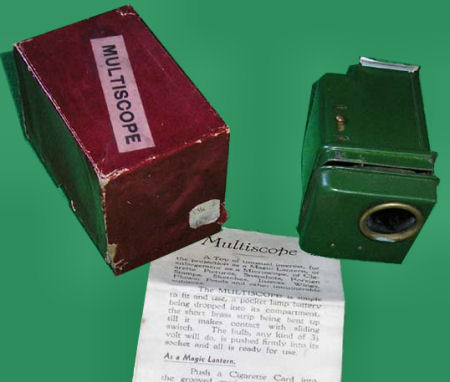 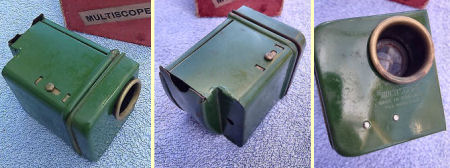 |
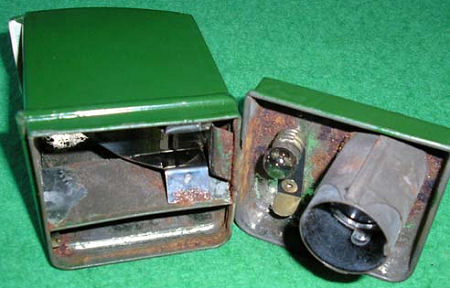 This Multiscope is 'a toy of unusual interest, for the projection as a magic lantern, or enlargement as a microscope, of cigarette cards, stamps, sketches, insect wings, flower petals, and other innumerable subjects'. Well, that is what is says in the instructions! The Multiscope episcope uses a 4.5 Volt pocket battery and, again according to the instruction leaflet..... when a cigarette card is moved into the grooved carrier at the back and switched on, a clear picture will be projected. It is stamped at the front 'Multiscope, made in England, patent applied'. It measures 11 x 8 x 8 cm. Complete with its original box and accompanying instruction leaflet. |
||
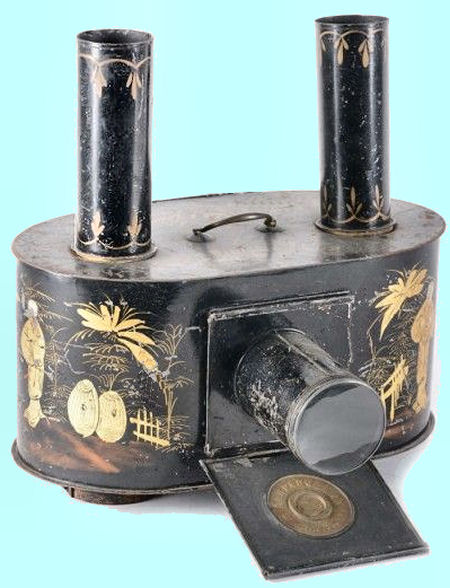 |
Delagrave Lampadorama. Delagrave, Paris, Soufflot 15, produced this attractive epidiascope in 3 different colours (red, brown, black) and 3 different decorations that have no connexion with the colours however. The gold painted Chinese looking decorations are not originally Chinese. The overall dimensions are 33 x 18 x 30cm. Delagrave applied for a patent for this lantern in 1882, under the name 'Lampadorama' (brevetée S.G.D.G., en forgeant fait le fevre 1882) Unfortunately the small caps on the chimneys are missing. 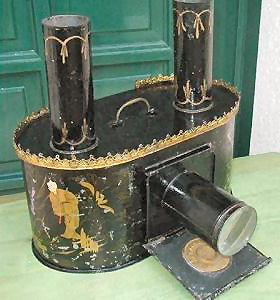 |
||
 |
 |
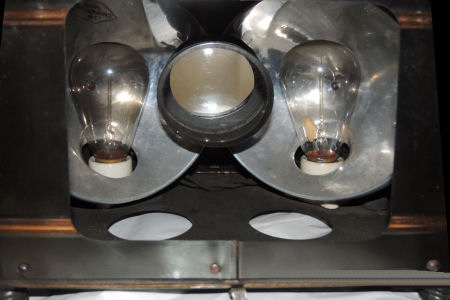 |
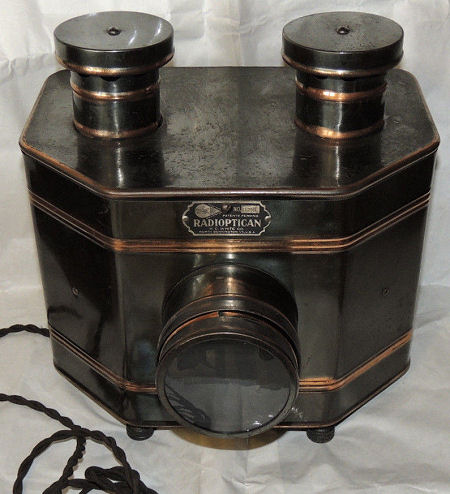
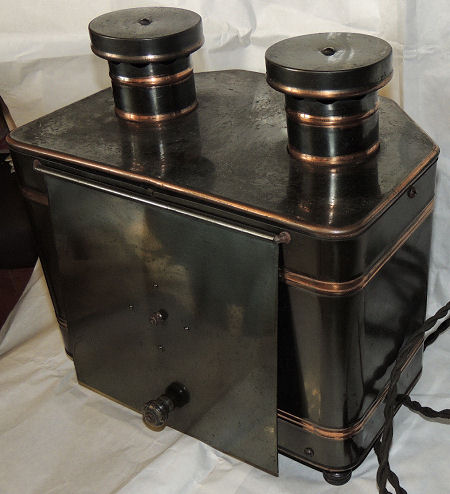
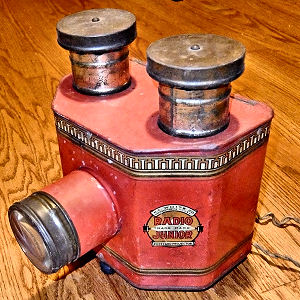
H.C.White & Co. Radioptican Inside reads, Radioptican, North Bennington, Vermont USA..H. C. White. trimmed in gold. Size Aprox. 14" x 15" x 13.25"  An
optional accessory is a twin picture holder at the back, so that one postcard can
be shown while the next one is prepared by inserting in the free half of
the holder. An
optional accessory is a twin picture holder at the back, so that one postcard can
be shown while the next one is prepared by inserting in the free half of
the holder. |
 |
 |
 |
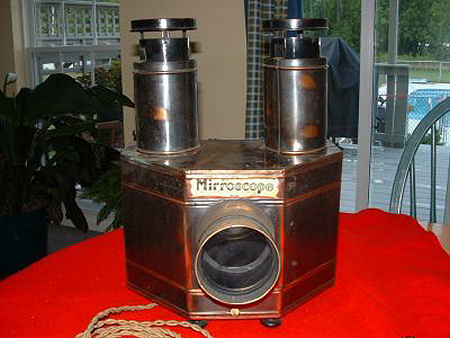
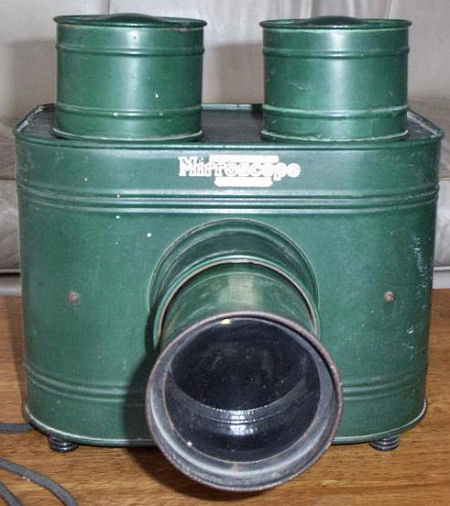
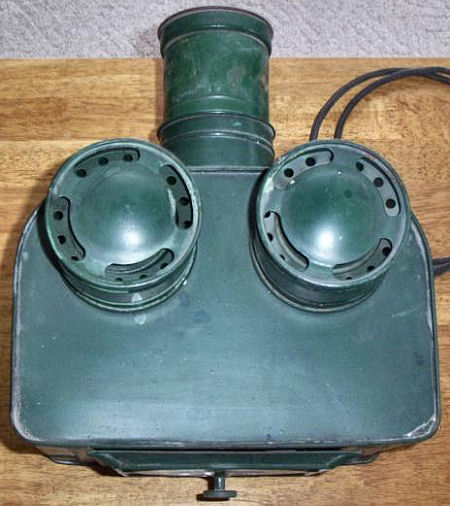
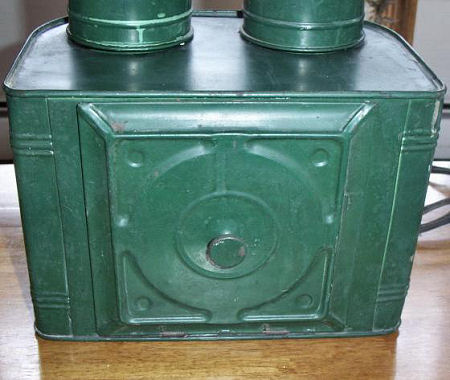
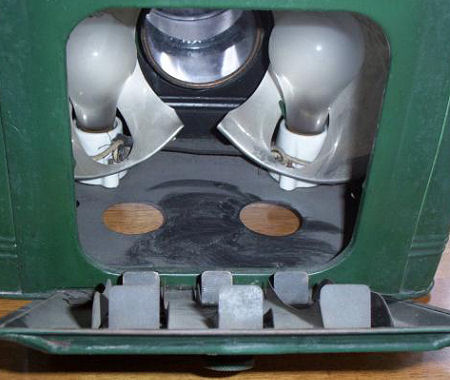
Mirroscope episcope
made in the USA by the Buckeye Stereopticon Co., Cleveland, Ohio. |
 |
 |
 |
 |
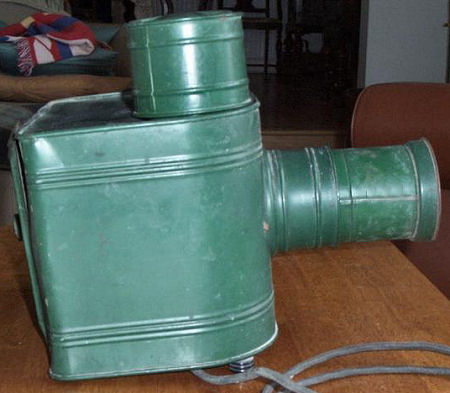 |
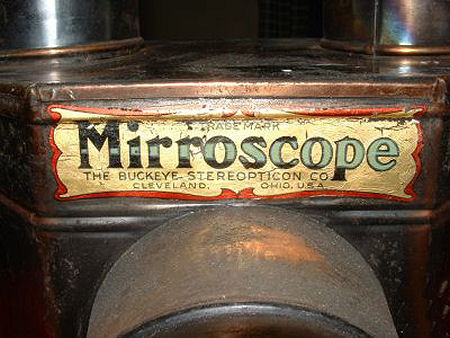
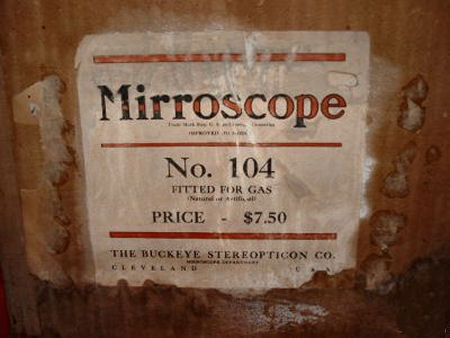
The original label states "Mirroscope",
"Cleveland, USA", and "Trade Mark Reg. US Pat Off". The original light bulbs are changed here for modern standard 40 Watt light bulbs. An early ad reads, "THE MIRROSCOPE IS A PROJECTOR ALSO CALLED AN EPISCOPE OR A MAGIC LANTERN. IT HAS A LIGHT BULB THAT ILLUMINATES THE OBJECT TO BE PROJECTED AND REFLECTS IT THROUGH THE LENS ONTO A WALL OR SCREEN. YOU CAN SHOW PHOTOS OR OTHER PAPERS. YOU FOCUS IT BY MOVING THE LENS TUBE IN AND OUT." |
 |
 |
 |
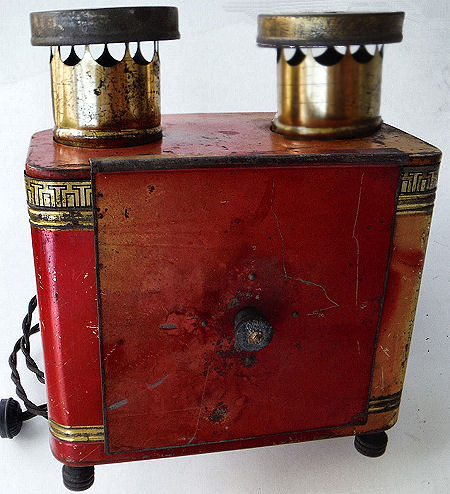 |
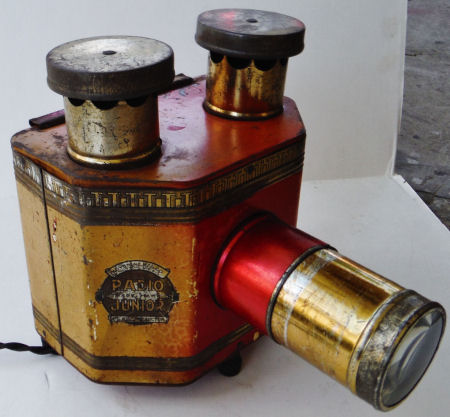
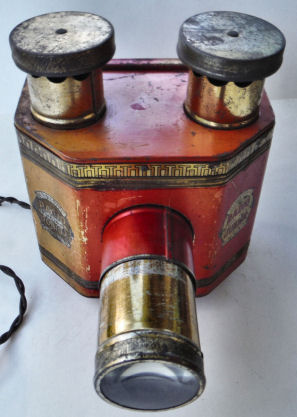
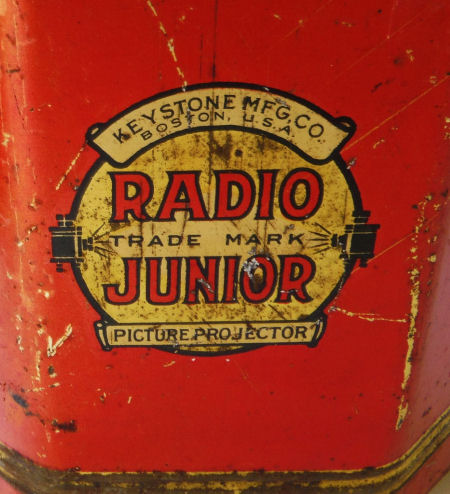
| Radio Junior picture
projector made by Keystone Mfg. Co. of Boston U.S.A, c. 1920). Wooden feet. Sizes: 9 inches wide, 10.5 high and 12 inches deep (c. 23 x 26.5 x 30.5 cm). |
|
 |
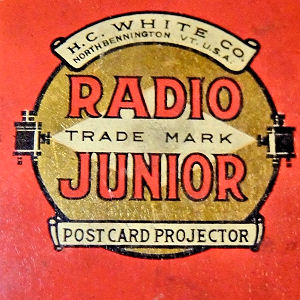 |
The Radio Junior picture projector was also produced with
another manufacturer's name in the trade mark: H.C. White & Co.
|
 |
|
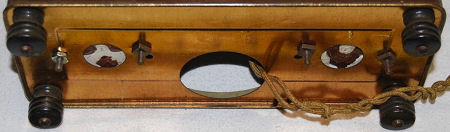 |
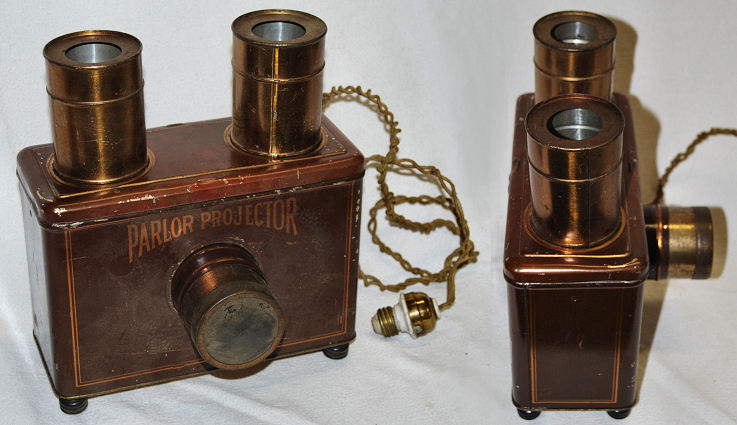
This Parlor Projector episcope is c. 10 inch
(25.5 cm wide ,
c. 7.5 inch (19 cm) high and c. 4 inch (10 cm) deep. The special main current plug fits
in a normal bulb screw fitting. |
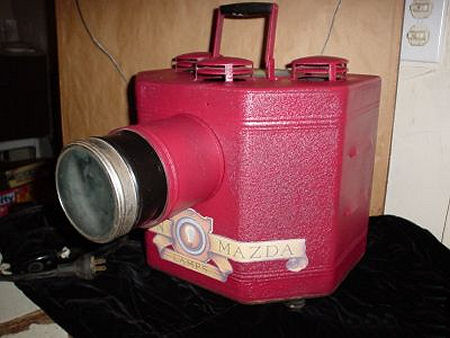 |
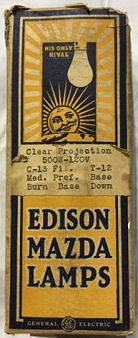 Edison Mazda Pictograph. Portable episcope in red hammer-scale lacquer, made by Edison Manufacturing Company, New Jersey, USA. Mazda was a trademarked name registered by General Electric in 1909 for the Edison Mazda incandescent light bulbs they made. Today, the Mazda name is more associated with the Mazda automobile manufacturer of Japan (which coexisted with Toshiba's Mazda bulbs in its early years). |
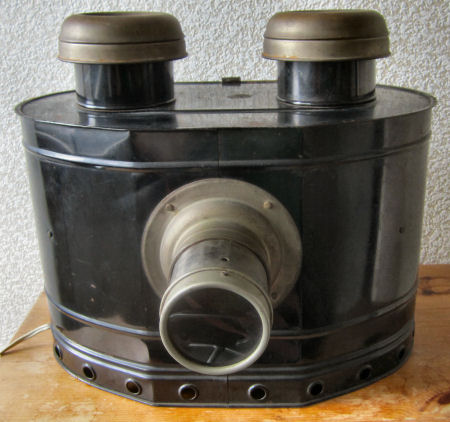 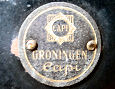 Episcope,
trade mark unknown. On the back a small plate with the text 'CAPI
- Groningen (Dutch retailer of photographic equipment). Episcope,
trade mark unknown. On the back a small plate with the text 'CAPI
- Groningen (Dutch retailer of photographic equipment). |
 |
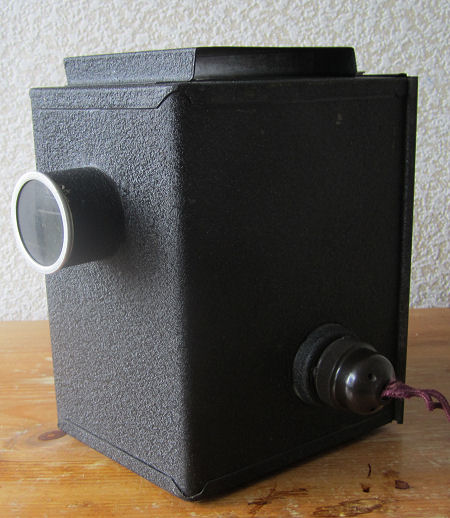 |
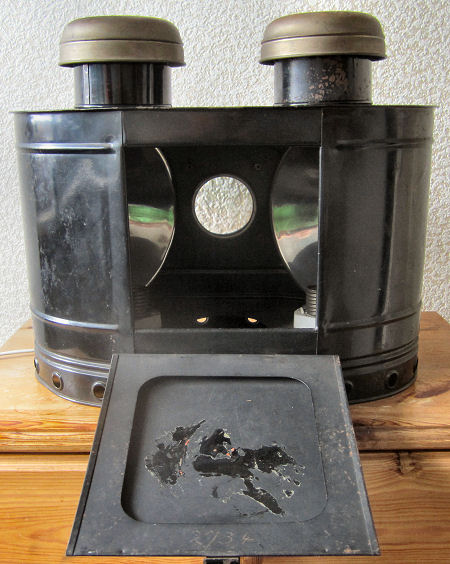
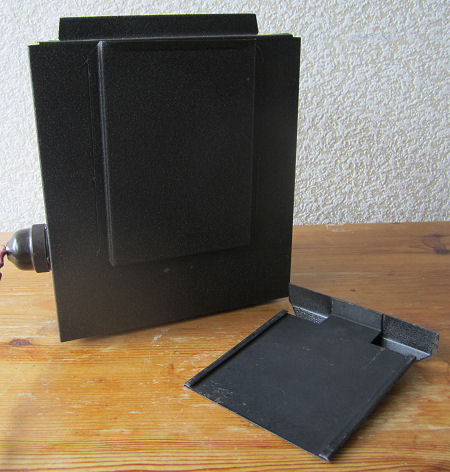 Simple episcope. Manufacturer unknown. With card holder that shifts into the back. |
 |
 |
|
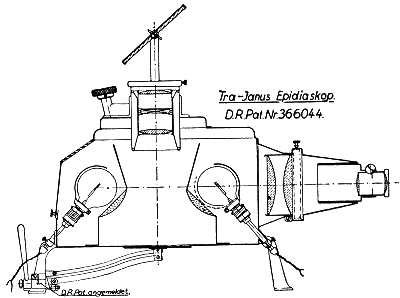
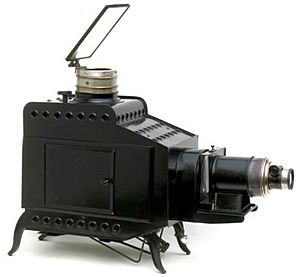
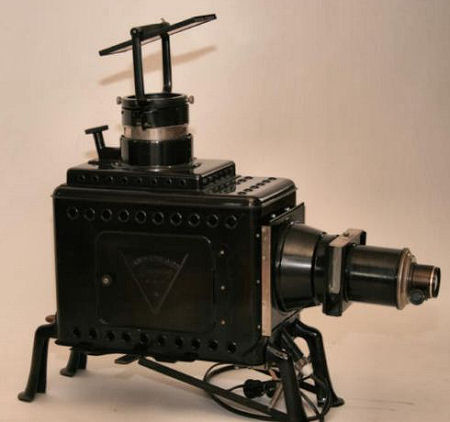
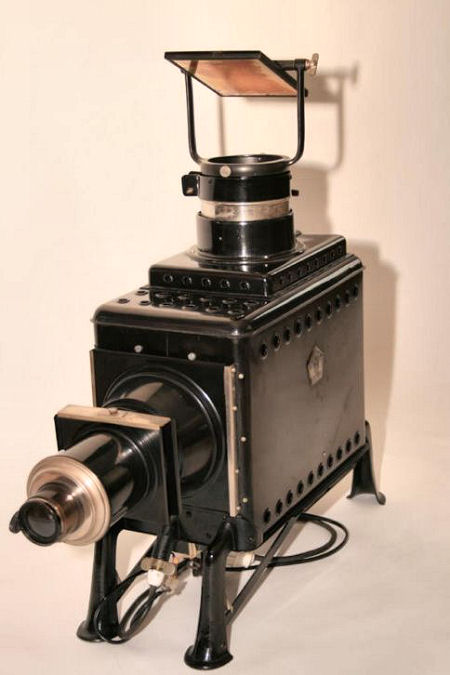
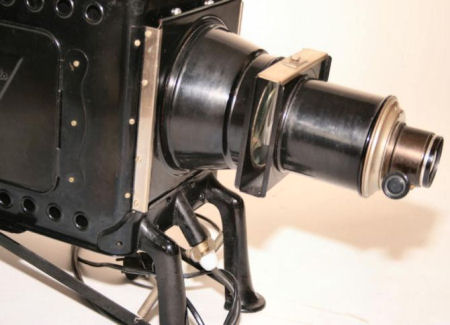
Epidiascope 'Trajanus', made by Ed Liesegang, Düsseldorf,
Germany.
|
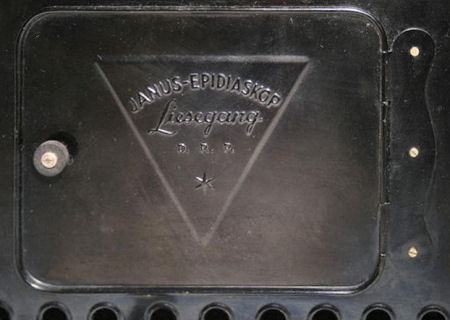 One of the best known epidiascopes is the 'Janus', made by Ed. Liesegang, c.1925, Düsseldorf, Germany. An improved version is this 'Trajanus', equipped with two lamps in stead of one. The opaque object or image rests on a metal sheet at the bottom of the lantern, which can be moved up and down by an ingenious lever system that holds the metal sheet always in a horizontal position. |
 |
|
More episcopes....
|
 
 |
©1997-2017 'de Luikerwaal' All rights reserved. Last update: 29-04-2017. |
 
|