
|
Temperance stories, part 1. |
| Father, dear father, come home with me now... | |
|
|
||||||||||
| Go to: | part 1 | part 2 | part 3 | part 4 | part 5 | part 6 | part 7 | part 8 | part 9 | part 10 |
|
|
||||||||||
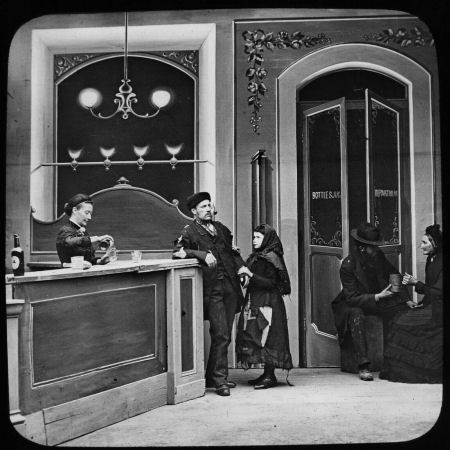 |
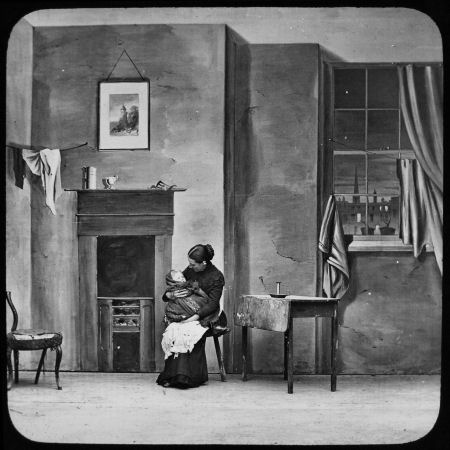
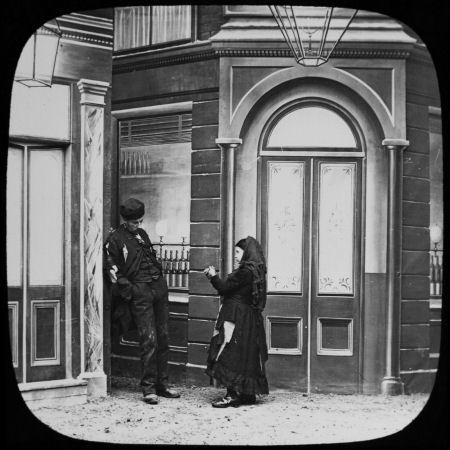
Father, dear
father, come home with me now, The clock in the steeple strikes one; You said you were coming right home from the shop As soon as your day's work was done; Our fire has gone out, our house is all dark, And mother's been watching since tea, With poor brother Benny so sick in her arms And no one to help her but me, Come home! come home! come home! Please father, dear father, come home. Melody and Text: - Henry Clay Work. |
 |
 |
|
Come home, Father. |
|
|
The temperance movement of the
19th and early 20th centuries was an organized effort to encourage moderation in
the consumption of intoxicating liquors or press for complete abstinence. It's
not amazing that movement's ranks were mostly filled by women who, with their
children, had endured the effects of unbridled drinking by many of their menfolk.
Alcohol was also blamed for many of society's demerits, among them severe health
problems, destitution and crime. At first, they used moral suasion to address
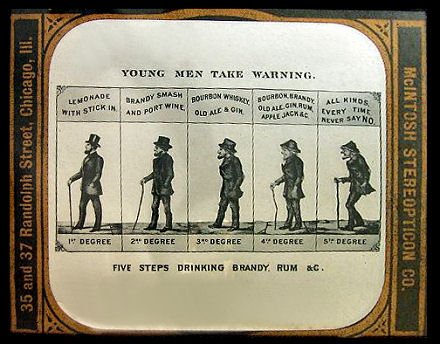
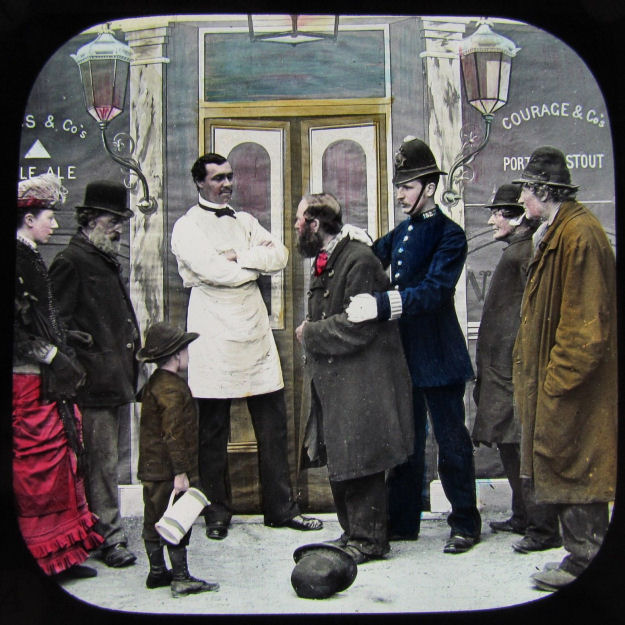
the problem. The earliest organizations in Europe came into being in Ireland in the 1820s and soon swept to Scotland and Britain. In the United States, a pledge of abstinence had been promulgated by various preachers at the beginning of the 1800s. Temperance associations were established in New York and Massachusetts. Thanks largely to the lead from the pulpit, some 6,000 local temperance groups in many states were up and running by the 1830s. The best-known temperance effort since the movement's heyday has been Alcoholics Anonymous. This widespread and venerable organization advocates total abstinence, but treats alcoholism as a disease and does not seek governmental control of the liquor industry. The temperance movement was always willingly to use modern technology to achieve its aims, and thus magic lantern slides and photography were put in when teaching the audience the evils of licentious life. In the 1880s there was a well-established network of suppliers and publishers in Britain including the United Kingdom Band of hope Union. Here local organizers could obtain magic lanterns and accessories, lectures, pamphlets and other texts. The lantern slides were usually for rent and not for sale. There were companies that made money from the movement, often for commercial reasons, but sometimes also out of sympathy with its goals. The magic lantern slide manufacturer Bamforth and the slide rental company Riley Brothers are good examples of companies that flourished thanks to the 'temperance movement'. A number of book publishers had good contacts with Bamforth, who produced lantern slides for many of their publications. Of course the most celebrated use of photography in temperance slides was the Life Model genre which flourished from the 1870th until World War I. |
|
 |
 |
| The Bottle. |
 |
 |
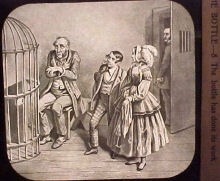 |
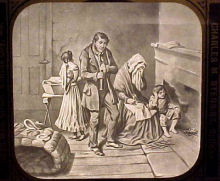
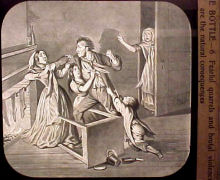
One of the best known temperance stories is "The Bottle" by George Cruikshank. There are a lot of versions of this impressive story. These are the last three slides of a version in sepia colours, made by McIntosh Stereopticon Co. Chicago. The slides measure 3 1/4" by 4". |
| #5 "Cold, Misery and Want Destroy the Youngest Child". | #6 "Fearful quarrels and brutal violence are the natural consequences". | #8 "The bottle has done its work." | |
| You will find the complete series here. | |||
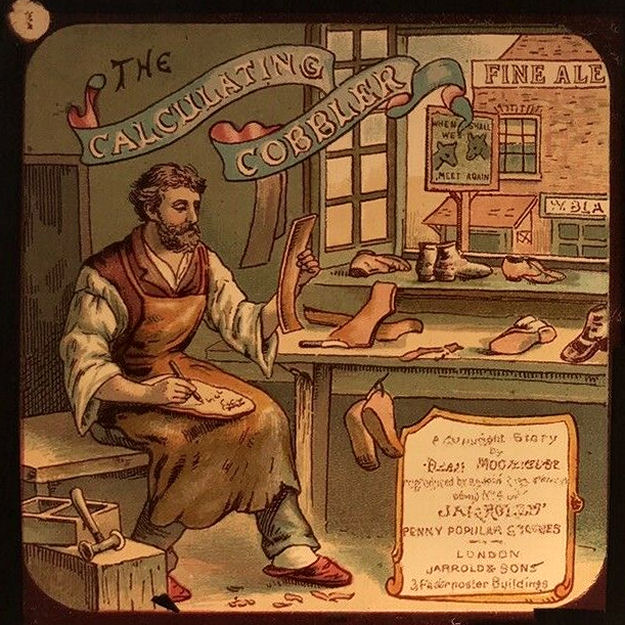
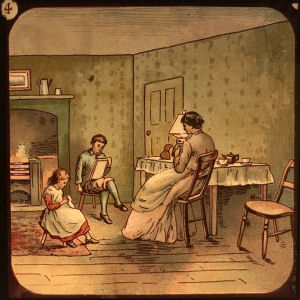
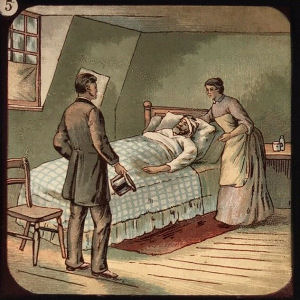
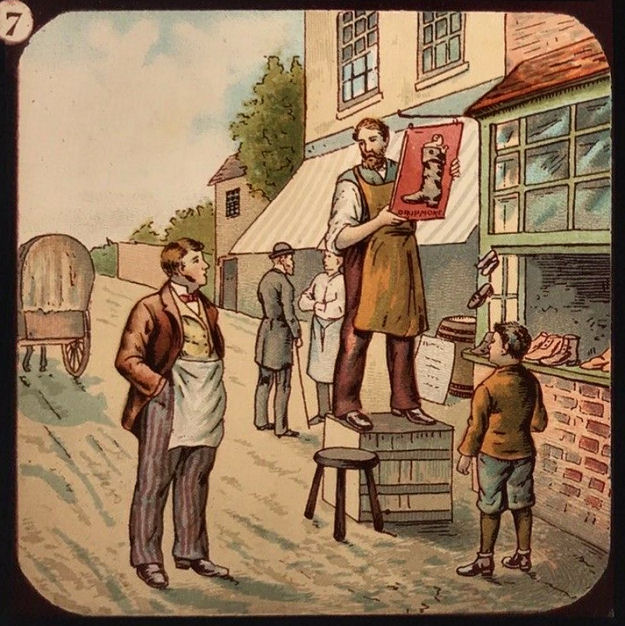
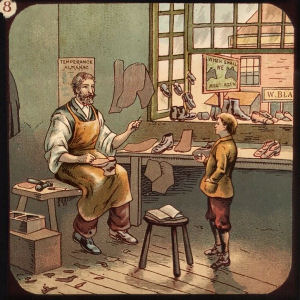
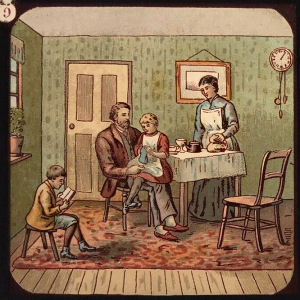
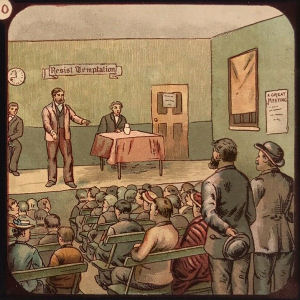
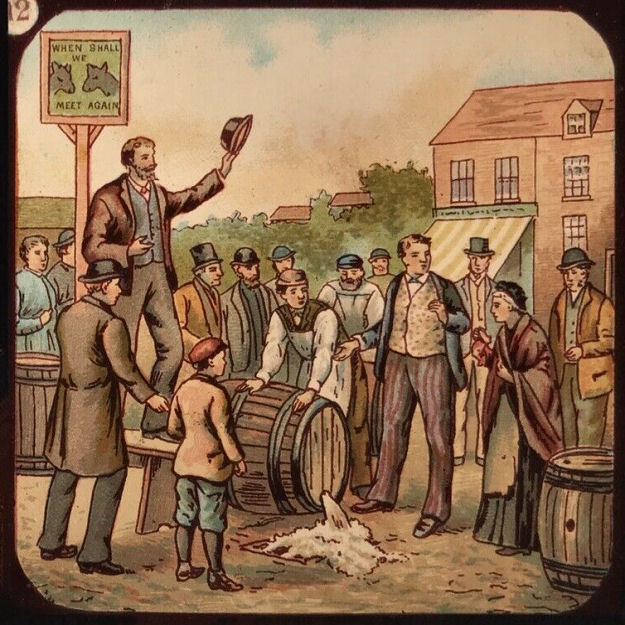
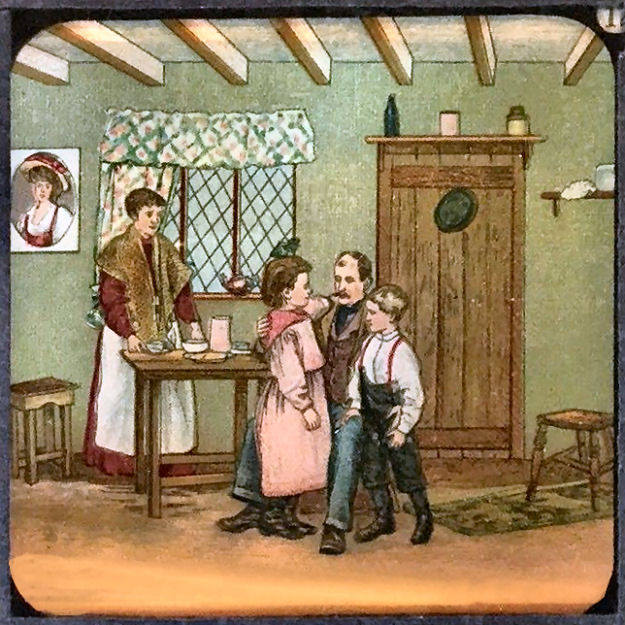
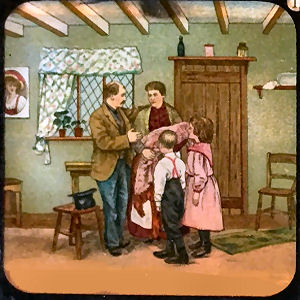
The Calculating Cobbler. A classic Temperance story. The slides measure 3 1/4" square and are described on the box as 'Superior Lithographic Coloured Lantern Slides'. The shield in the corner of the first slide says: 'A Copyright Story by Ellen Moorhouse reproduced by special permission, being no. 4 of Jarrolds' Penny Popular Stories. London Jarrold & Sons, 3 Paternoster Buildings.' This whole area was bombed to bits during WWII, so doesn't exist any more. |
 |
||
 |
 |
|
 |
||
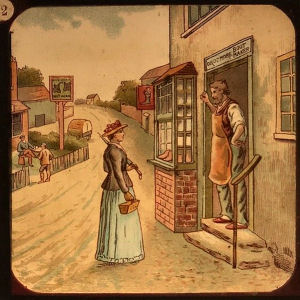
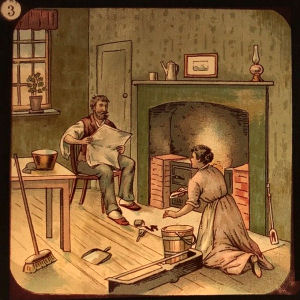
| 1. Mr Dropmore calculates how much drink he can buy. | 2. A firm word and reproach from a good customer. | 3. Mr Dropmore is no help to his hardworking wife. |
 |
 |
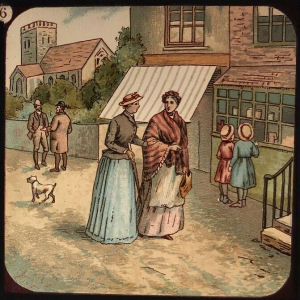 |
| 4. Mother and children alone. Father is at the Pub. | 5. Mr Dropmore, the worse for drink. 'He will recover'. | 6. Helpful advice from the good lady. 'Come to the meeting'. |
 |
 |
|
 |
||
| 7. Mr Dropmore makes a new start. He changes name. | 8. The diligent Cobbler proudly displays his work to his son. | 9. At home -- A happy scene. |
 |
 |
|
 |
||
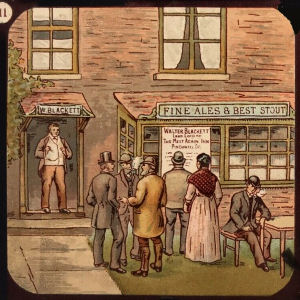
| 10. The Cobbler speaks at the Temperance Meeting. | 11. Mr Blackett is going out of business. | 12. A converted Mr Blackett has the barrels drained. |
Ten Nights in a Bar Room. |
|
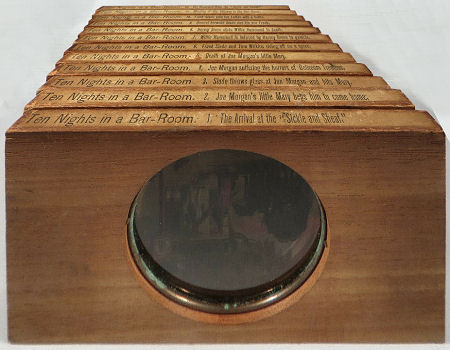 |
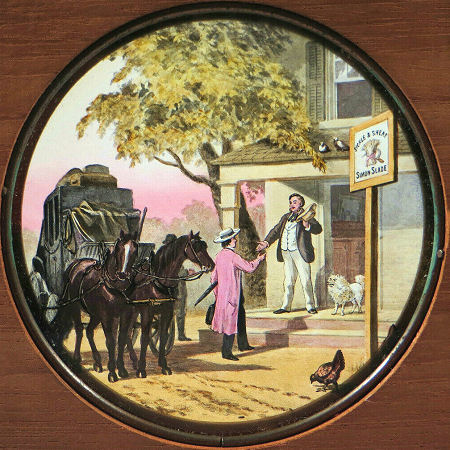
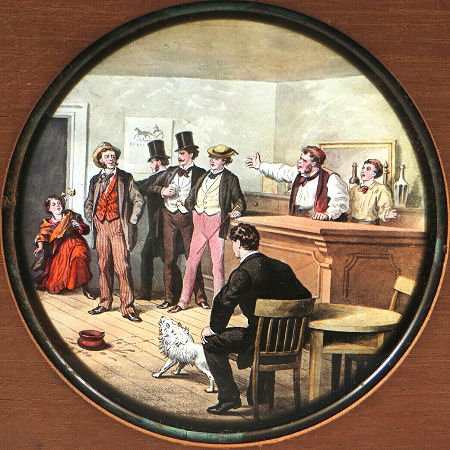
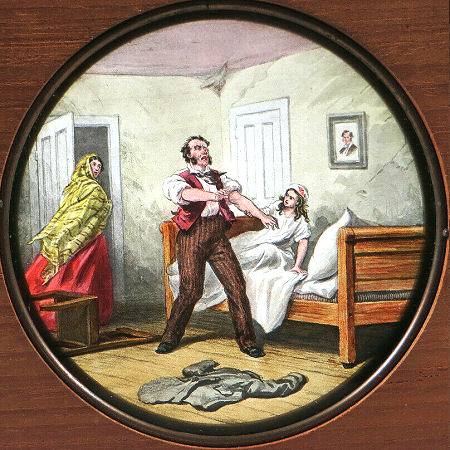
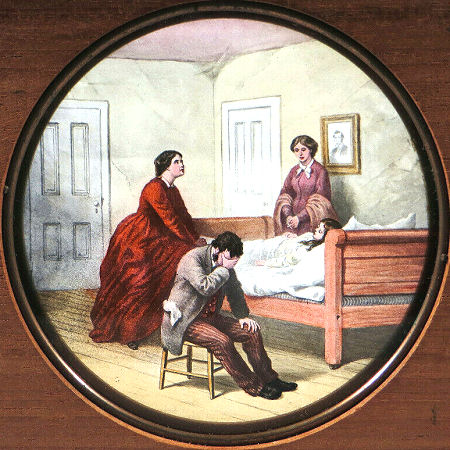
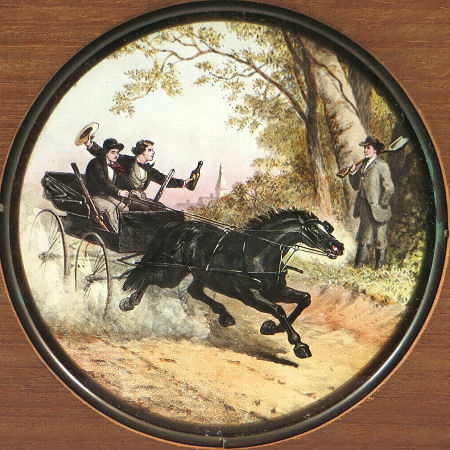
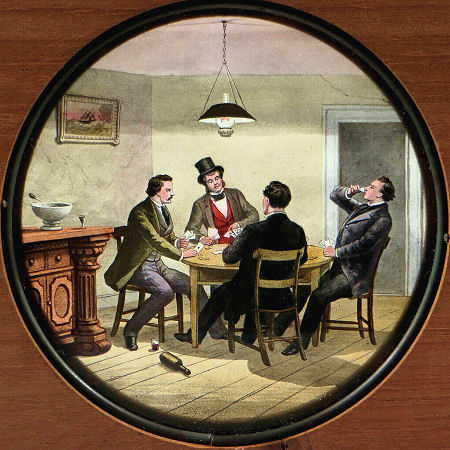
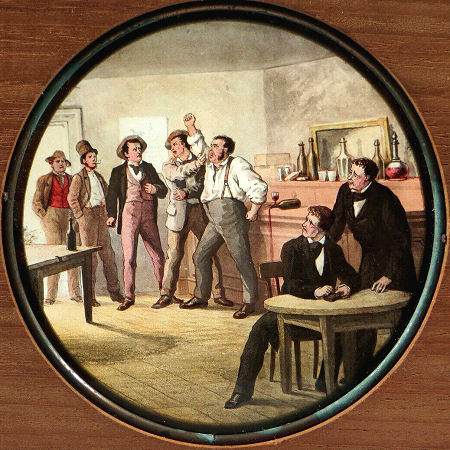
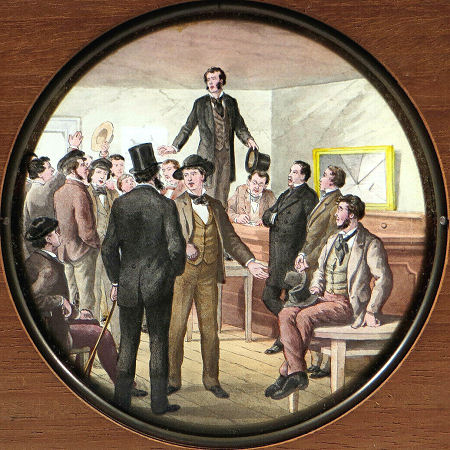
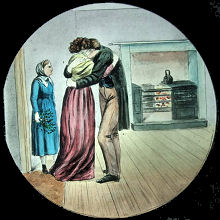
This set of 12 magic lantern slides was produced by T.H. McAllister, Manufacturing Optician, 49 Nassau Street, N.Y., after the 1854 novel 'Ten Nights in a Bar-room and What I Saw There' by American author Timothy Shay Arthur. It strikingly shows the evil sides of drinking and the consequences it has for an entire family. The round plates are mounted in a wooden frame measuring 4" x 7" (10 x 18 cm). |
 |
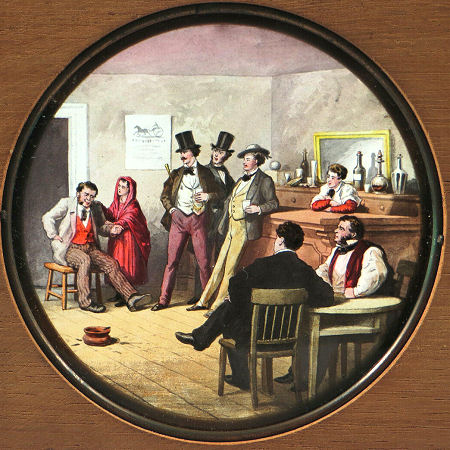 |
| 1. The Arrival at the "Sickle and Sheaf" | 2. Joe Morgan's little Mary begs him to come home |
 |
 |
| 3. Slade throws glass at Joe Morgan and hits Mary | 4. Joe Morgan suffering the horrors of Delirium Tremens |
 |
 |
| 5. Death of Joe Morgan's little Mary | 6. Frank Slade and Tom Wilkins riding off on a spree |
 |
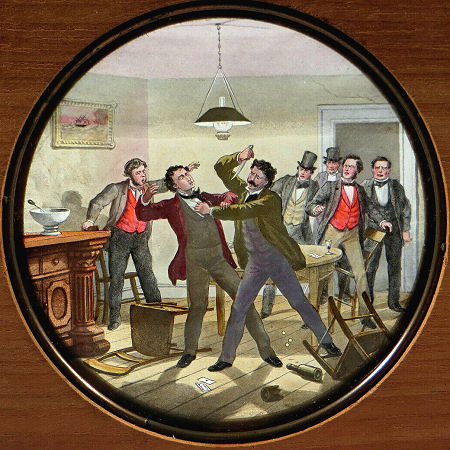 |
| 7. Willie Hammond is induced by Harvey Green to gamble | 8. Harvey Green stabs Willie Hammond to death |
 |
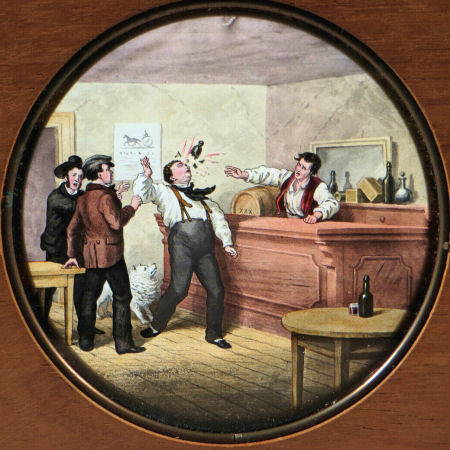 |
| 9. Quarrel between Slade and his son Frank | 10. Frank Slade kills his father with a bottle |
 |
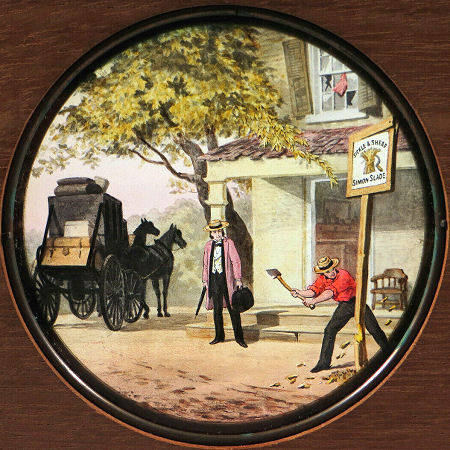 |
| 11. Meeting of the citizens in the Bar-Room | 12. The Departure from the "Sickle and Sheaf" |
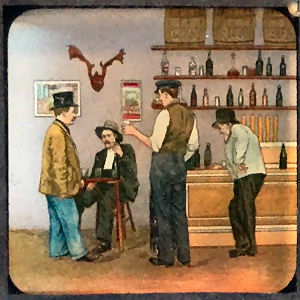
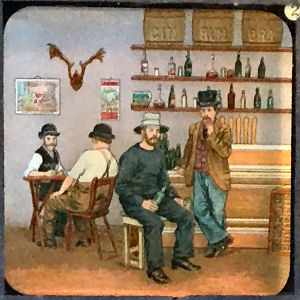
The two Drunkards. A nice set of twelve square magic lantern slides made by Theobald & Co., Engeland. |
||
 |
 |
 |
 |
 |
 |
 |
 |
 |
 |
 |
|
 |
||
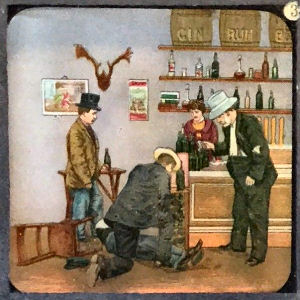
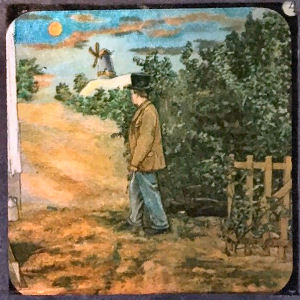
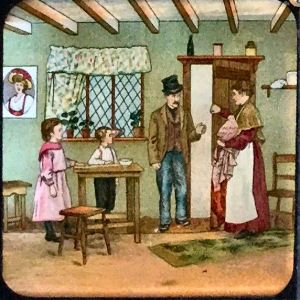
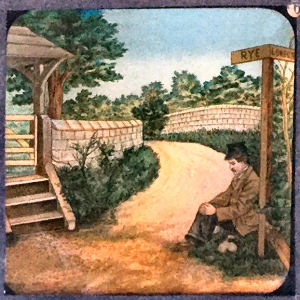
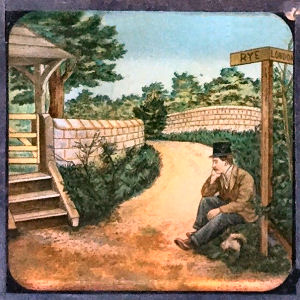
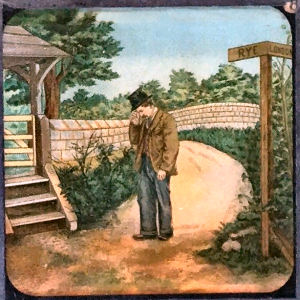
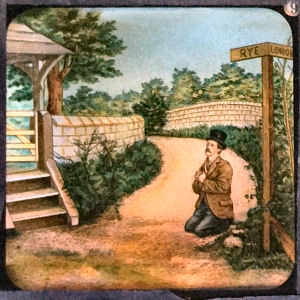
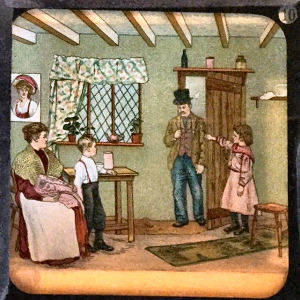
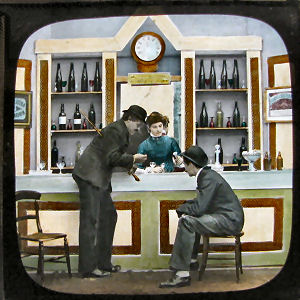
| Set of twelve magic lantern
slides of an unknown temperance story. A man is enjoying a drink in the local
bar. Suddenly someone faints and falls to the floor. He walks home where he
finds a blaming wife and children. He leaves the house and sits under a signpost
for the duration of four whole slides where he finally prays for forgiveness.
Back home again he promises never to drink again and everybody is happy. |
||
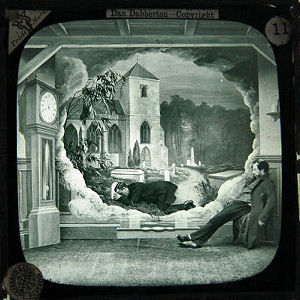
| Dan Dabbertons Dream. | ||
 |
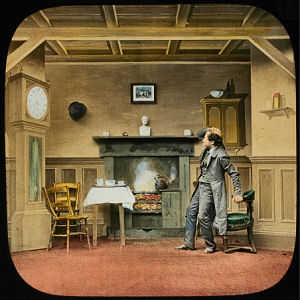 |
 See here the complete sets of this dramatic Christmas story. |
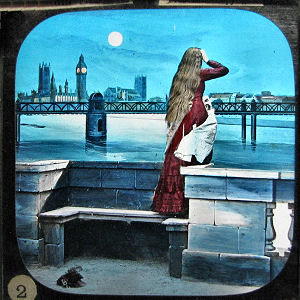
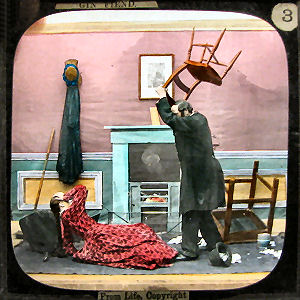
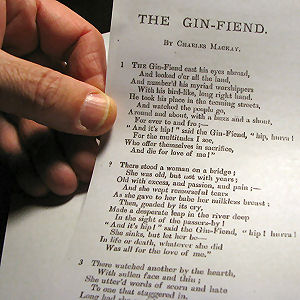
The Gin-fiend. A temperance melodrama of the 1890s in which a woman is brutally murdered by her drunken husband. Tortured by the memory of his evel deed, he ends hid days in a lunatic asylum. |
||
 |
 |
 |
 |
 |
|
|
A set of four slides made by York & Son after a poem by
Charles Mackay. c. 1885.
The slides measure 8.2 x 8.2 cm. 1. The Gin Palace. 2. The suicide. 3. The murder. 4. Turned out. The Gin-Fiend cast his eyes abroad And looked o’er all the land, And number’d his myriad worshippers With his bird-like, long right hand. |
||
|
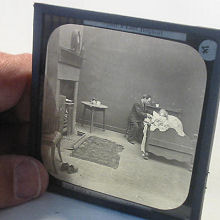
Jessies Last Request. |
|||
 |
 |
 |
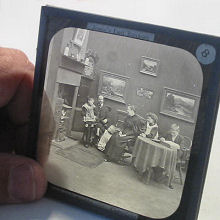 |
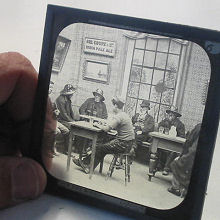
| Four slides
from a temperance Life Model set of twelve
slides, made by Bamforth's, one of the UK's finest lantern slide
manufacturers (1899). |
|||
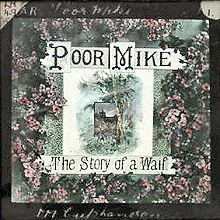
| Poor Mike. The Story of a Waif. | |||
 |
 |
 |
 |
 |
 |
 |
 |
 |
 |
 |
 |
 |
 |
 |
 |
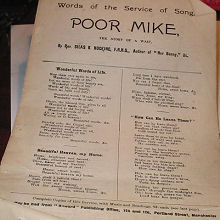 |
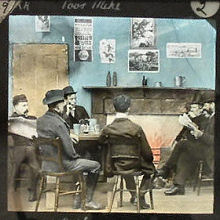
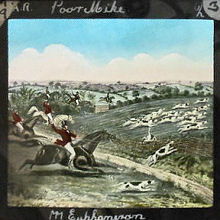
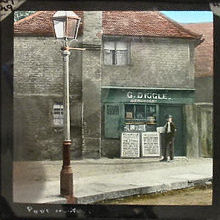
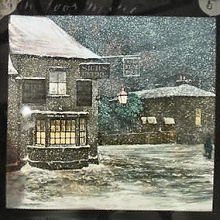
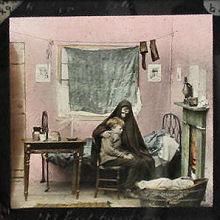
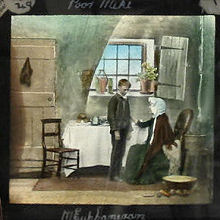
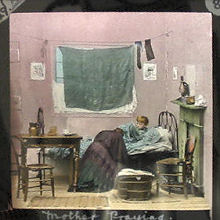
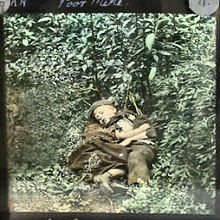
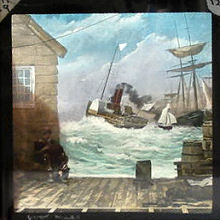
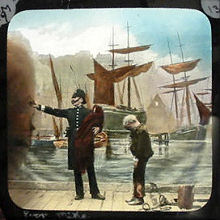
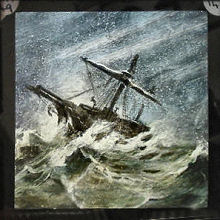
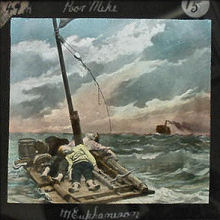
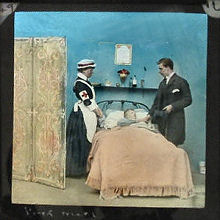
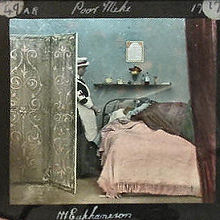
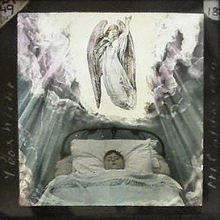
This is the temperance story of "Poor Mike, the story of a waif". It has everything you can expect from a Victorian magic lantern melodrama: drink, poverty, shipwreck and a dying child at the end. These 18 British glass magic lantern slides measure 3.25" square (two of them are missing here). The slides were presented as a series of songs and hymns and the original song sheet is shown alongside. | ||
 |
|||
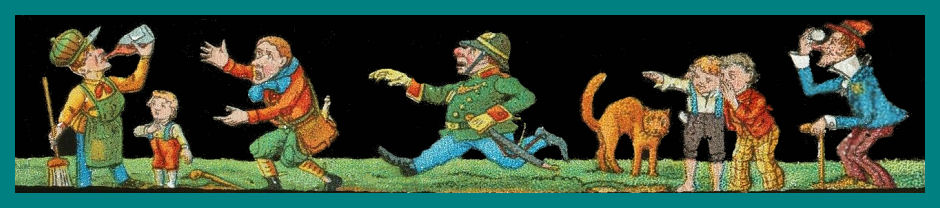
| A complete story summarized in one slide. Father puts the bottle to his lips and everyone goes into a panic: The boy speaks to him reproachfully, the neighbour interferes in it, even the cop runs to the crime scene, the cat turns away from him, schoolboys whisper their jokes in each other's ear and the old man smiles satisfied. He has something to tell his contemporaries when he sits on the gossip bench in the village. A long glass magic lantern slide made by an unknown manufacturer. | |||
More tear-jerking temperance stories.... |
|||
 
 |
©1997-2023 'de Luikerwaal' All rights reserved. Last update: 22-12-2023. |
 
|