 |
 MANUFACTURERS, IMPORTERS, AND RETAILERS. A-C |
|
|
References: To produce this extensive list the following sources were consulted: Encyclopaedia of the Magic Lantern. The Magic Lantern Society, London, England, 2001. Van Toverlantaarn tot Kinematograaf. Vera Tietjens-Schuurman. Stichting Peter Bonnet Museum, Rottevalle, Friesland, the Netherlands, 1979. Laterna Magica, Zauberwelt und Faszination des optischen Spielzeugs. Ernst Hrabalek. Keysers Sammlerbibliothek G.m.b.H., Regensburg, Germany, 1985. and others. |
||
ABBE, ERNST Physics and mathematics lecturer at the University of Jena, who in 1866 became Carl Zeiss's partner. |
||
|
ABRAHAM, ABRAHAM Optician and instrument maker, Liverpool, England. Started 1817, dealing in scientific instruments and other optical equipment, including magic lanterns. In 1851 the company A. Abraham & Co. was formed. Under this name the business continued until 1875 when it was taken over by George S. Wood. (1817-1875) |
||
|
ABRAHAM & DANCER Optical instrument makers, Manchester, England. The business was opened in 1841 as a branch of Abraham Abraham, operated jointly by W. Abraham (son of Abraham?) and John Benjamin Dancer. After 1845 the business continued in the name of Dancer alone. (1841-1845) |
||
|
ACRES & SON, C. English slide painters of 10 Malvern Road, Hornsey, London N. The firm undertook dissolving views painting in 1895. |
||
|
ADAMS, DUDLEY Son of George Adams, English optician and scientific instrument maker working in London. (1788 to 1817) |
||
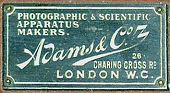 |
ADAMS, GEORGE English instrument maker and retailer in London. His son, George junior, continued the business after his death, until 1795. (c. 1760-1795) |
|
|
ADLER & Cie, J.W. Austrian manufacturer of lanterns and technical instruments in Vienna. In the 1880s the company also offered lantern slides for both educational and entertainment use. |
||
|
AEI British electrical equipment manufacturer that took over the business of Newton & Co., c. 1920. |
||
|
AIRS & Co. English lantern manufacturer at 84 Hatton Garden, London EC. In 1896 the company produced the Bessus patent lantern, in a single and biunial version. |
||
|
L' AISNÉ French optician and magic lantern maker, 35 Quai des Orfèvres, Paris. (c. 1780s) |
||
|
ALCO-GAS APPLIANCES Co. New York manufacturer of the Reflectoscope, an episcope for opaque object projection. |
||
 |
ALEF Trade name of the Optische Anstalten A. Lehmann. See: Lehmann, A. |
|
|
AMERICAN SLIDE COMPANY Slide dealer, based in Columbus, Ohio. Some of their slides were made from photographs obtained from the International News Association. |
||
|
AMERICAN STEREOSCOPIC COMPANY See: Langenheim, William and Frederick. |
||
|
AMES See: Henderson & Ames Co. |
||
|
AMUSEMENT SUPPLY COMPANY American stereopticon dealer, based in Chicago, around 1910. |
||
|
ANDERSON, MARTIN Scottish social and political cartoonist and lanternist. At the beginning of the 20th century a staff of over a hundred employees worked out of studio premises at Tayport in Scotland to issue all kinds of print work, among which hand painted magic lantern slides, based exclusively on Anderson's work. |
||
|
ANSCO See: Anthony Company E. & H. |
||
|
ANTHONY COMPANY E. & H. American photographic supply firm based in New York. By the 1860s the firm offered a wide range of lantern slides and lanterns. The company is still active today under the name Ansco. |
||
|
APPLETON & Co. British manufacturers of magic lanterns and slides, in Bradford, Yorkshire, Besides having many lanterns and slides for sale, the company had also an extensive slide loan department. |
||
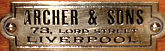 |
ARCHER (& SONS) English family of lantern and slides manufacturers and dealers in Liverpool, from 1857 to 1900s. Initially working under the name Archer & Inch, later under Archer's name alone. The business was founded by William Frederick Archer; in the early 1880s his three sons joined in the business. In the 1890s the company was organised into three departments, each managed by one of the brothers: one for the lanterns and accessories, one for general optic goods, and one for photographic equipment. In the late 1880s and 1890s Archer and Sons were probably one of the largest lantern manufacturers in the North of England. (1857-1900s) |
|
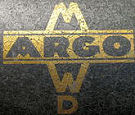 |
ARGO The "ARGO" magic lantern was made by Müller & Wetzig in Dresden, Germany. |
|
|
ARMSTRONG, THOMAS English lantern and slide dealer (1880s-1900s). |
||
|
ARMSTRONG & BROTHERS Opticians to the Royal Eye Hospital, Manchester, England. |
||
 |
AUBERT, LOUIS French lantern and slide manufacturer. Around 1840 Aubert opened a shop in Paris. His magic lanterns are characterised by a colourful decoration of spirit-based lacquer. In 1854 he filed a patent for a system of illumination, known as the Aubert system. Aubert created a lot of very graceful lanterns, like the famous Buddha lantern (see also Very special magic lanterns), the magnificent Leçon de Choses and the Lanterne Riche. The company was bought in 1884 by Auguste Lapierre, who thus took over his main rival, but the name of Aubert enjoyed such a high reputation that Lapierre left the continuing lantern production to Aubert. On the occasion of the 1889 Exposition Universelle (World Fair) Aubert launched the Eiffel Tower Lantern, produced in four sizes and finished in polychrome lacquer (see also Very special magic lanterns). In 1891 his workshops were finally amalgamated with those of Lapierre. (1842-1891) (See also: Magic Lanterns Louis Aubert) |
|
AYSCOUGH, JAMES English optician who became an apprentice from James Mann in 1732 and formed a partnership with him from 1743 to 1747, when he took over the business. Ayscough sold a full range of optical instruments, including magic lanterns. After his death in 1759 the business was first taken over by his wife Martha and later, in 1767, by Joseph Linnell. |
||
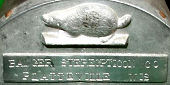 |
BADGER STEREOPTICON Co. This American manufacturer made a lantern that is entirely made out of aluminium. On the rear panel just above the name shield of the manufacturing company, i.e. "BADGER STEREOPTICON CO.," PLATTSVILLE, WIS.", a profile bas-relief of a badger is affixed. (c.1890) |
|
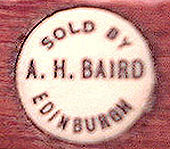 |
BAIRD, ANDREW H. Scientific Instrument Makers, Edinburgh, Scotland. |
|
BAKER, CHARLES English optical equipment and lantern makers, London. (1851-1909) |
||
BAMFORTH & Co. British slide manufacturer. According to the texts of his advertisements, by the late 1890s James Bamforth was ‘The Largest Producer in the World’ of life model slides. He started as a studio photographer in Holmfirth, in 1870. Some ten years later he began making lanternslides in a variety of subjects, but soon he specialised in Life Model sets. (See also Life Models) Around 1898 a large extension of the studio in Holmfirth was built and branches or agencies in London and New York were opened. After producing a few comic films, mainly based on slide sets, the company began to produce photographic postcards, initially from the same negatives as the slides. Soon the success of this venture began to surpass the production of slides, that appears to have finally ended during World War I. Today the company is remembered mainly for their later specialisation in saucy seaside postcards depicting fat ladies, dumb blondes, mothers-in-law and henpecked husbands. The family business was taken over by Dennis & Co. of Scarborough in the early 1990s. (c. 1883-c. 1914) |
||
BARNARD & SON, J. English slide manufacturers and dealers, London. The company was established in 1841 by Jabez Barnard, an artists' colourman. His son became involved in the business in 1860. From around 1870 Barnard produced chromolitho transfer slides following a process in which the slides were fired after application of the transfer picture. Their 'Patent Enamel Slides' were sometimes marked 'B & S Patent'. The firm also sold sheets of transfers and published slide readings and manuals. (1843-1900s) |
||
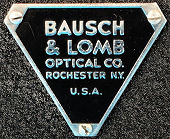 |
BAUSCH & LOMB OPTICAL COMPANY Bausch & Lomb was founded in 1853 by the German immigrants John Jacob Bausch and Henry C. Lomb in Rochester, New York. Bausch was a trained optician and found in Lomb the financier and partner he needed for his small workshop producing monocles. He promised Lomb that if the business ever grew to where it could support a partner, Lomb would come into the company. During the American Civil War, the Union blockade caused the price of European horn to rise dramatically and this resulted in a growing demand for the Bausch & Lomb spectacles made from Vulcanite rubber. In 1876, the company began manufacturing microscopes. Later they also produced photographic lenses, spectacle lenses, binoculars and telescopes. From 1892 the company produced optical lenses in cooperation with Zeiss. At the end of the 19th century the product range included projectors, camera lenses and camera diaphragms. Besides lanterns for home use the company manufactured scientific lanterns and biunialsof high optical quality, many under the name 'Balopticon'. In 1902, William, the son of the founder, developed a process to create the desired lens shape directly by casting molten glass and this brought significant savings in time and materials. Bausch & Lomb soon became the first American producer of optical-quality glass. In 1971, Bausch & Lomb introduced the first soft contact lenses and is still the largest global provider of eye care products. Today, about 13,000 employees in 36 countries work for the firm. |
|
BAUZ, CHARLES ADOLPHE French scientific and optical instrument maker. (1865-1908) |
||
BEALE, JOSEPH BOGGS American slide illustrator. Beale worked for the C. W. Briggs Co., a wholesaler who specialized in illustrated slides. From 1881 to 1914, Beale created about 2,100 slide designs, making up about 250 sets or groups, including sets of American and World literature, history, Bible, and Secret Society. Because Briggs was a wholesaler, Beale's work was sold by over 55 different lantern companies, and completely dominated the market. For all practical purposes he created American screen entertainment in the generation before the movies. |
||
BEARD, ROBERT ROYOU British inventor and manufacturer of lantern accoutrements. Robert was born in London, 1856. His family were in the wine trade but the young Robert became apprenticed to Oakley's, a firm of brass-finishers, who were involved in the manufacture of magic lanterns. In 1882 he set up his own company. Although in those early days a wide range of gas-controlled lighting equipment was manufactured by the company, it was in the theatre, film and photographic industries that Beard made its name. After the introduction of the early magic lanterns, the company developed a range of projection equipment, including the first portable movie projector. Some of his many patented inventions are his well-known gas regulator for dissolving lanterns, his 'Eclipse' self-centring carrier in which slides easily could be changed by the operator without having to lean over the lantern and the 'Pringle-Beard bellows-front lantern'. The R.R. Beard company continued in business until the 1980s, but continued to trade as Photon Beard Ltd (following amalgamation with Photon Lighting Ltd in 1990), producing low-energy lighting for the film and television industries. (see also Dissolving views) |
||
BENERMAN & WILSON LANTERN SLIDE COMPANY American slide producers in Philadelphia. The company started in the 1870s as an agent of the French slide manufacturer Levy et Cie. They specialised in 'complete outfits' for entrepreneurs wishing to take up lantern exhibition. |
||
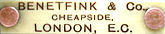 |
BENETFINK & Co. Retailer of photographic and lantern requisites and other items in London. Using in succession the names Benetfink & Jones (c. 1845-1851), Benetfink & Co. (1852-1861), Benetfink & Fox (1862-1866) and finally again Benetfink & Co (1867-c. 1900). |
|
|
BENNET, JOHN British optical instrument maker, Soho, London. Advertised magic lanterns. (1735-1770) |
||
BENZINGER, Th. Th. Benzinger, Lichtbilderverlag, Stuttgart, Germany. Publisher of lantern slides. |
||
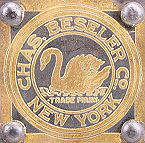 |
BESELER, CHARLES The Charles Beseler Company was founded by Charles Beseler, a businessman in Germany in the 19th century who sold and made magic lanterns, magic lantern slides, and stereopticons in New York. In 1890 the firm made its reputation with a lantern balanced on a single swivel point, allowing it to be easily tilted or turned. The company published several catalogues. Beseler died in 1909, but his company remained and then moved to New Jersey in 1919. The company manufactured photographic enlargers and other photographic equipment throughout the 20th century. |
|
BEST DEVICES CO. American manufacturers of projectors for theatre projection. Cleveland, Ohio. (1920s) |
||
BESTELMEIER, GEORG HIERONIMUS German dealer in Nuremberg. In an illustrated catalogue of 1793 we find many optical items and a magic lantern of an unidentified manufacturer. Subsequent Bestelmeier catalogues offered an increasing variety of toy lanterns. |
||
BIENVENU French lantern manufacturer. In 1787 Bienvenu openend a shop on the first floor of 18 rue de Rohan, Paris. (1787-1805) |
||
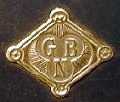  |
BING, GEBRÜDER Gebrüder Bing, A.G. Nürnberg, Bayern, Germany. One of the most famous Nuremberg toy manufacturing companies, founded in 1866 by the brothers Ignaz and Adolf Bing. The company used several trade marks. Initially marked by 'G.B.N. Bavaria'; later by 'G.B.N.' and 'B.W.' (Bing Werke).; after World War II only by 'B.W.' Besides toy lanterns the company produced also other toys like steam engines, trains, dolls-house furniture and also kitchen and household items. By the turn of the penultimate century the firm employed circa five thousand workers. Their catalogues were printed in German, French and English and their goods were sold throughout the world. After the Great Depression of 1929 some of the stock, tools and sales offices were taken over by other Nuremberg manufacturers, like Johann Falk and Karl Bub. The Bing Brothers were almost certainly the very first to launch on the market cinematographic toy lanterns. (See also: Magic Lanterns Gebrüder Bing Nürnberg) |
|
BINNENDIJK, H. H. Binnendijk Fzn., Vlaardingen, the Netherlands. Presumable manufacturer of magic lantern slides. |
||
BIRD, FREDERICK CHARLES British photographer and slide maker. Locally known for his landscape prints. He also produced illustrated hymn versus, Life Model sets, nursery rhymes and children's stories. (c. 1870) |
||
BIRD, GRAYSTONE Son of Frederick Charles. Photographer and slide maker. His wife Lucy coloured and mounted the slides. |
||
BIRMINGHAM PHOTOGRAPHIC Co. Ltd. English makers of a specialist range of photographic appliances, including a fine series of optical lanterns. (1892-1972) |
||
BISCHOT, J. German magic lantern manufacturer and slide dealer. 'J. Bischot Lehrmittel-Anstalt Berlin N' was active in the 1880s and 90s. |
||
BLAND & LONG/BLAND & Co. English opticians and instrument makers, Fleet Street, London. Charles A. Long, who wrote several books on photography, and his partner William J. Bland retailed magic lanterns and may have produced them in their workshops too. Business was taken over by Negretti & Zambra. (1850s-1864) |
||
B.L.P.C. Trademark of the Brenkert Light Projection Co. |
||
BOGOPOLSKY, JACQUES see BOLEX. |
||
BÖHM, HEINRICH R. German manufacturer of dissolving views and other lantern slides in Hamburg. (1870s-1890s) |
||
|
BOLEX Bolex, Switzerland. The name Bolex comes from Jacques Bogopolsky, also called Boolsky. He was a Russian engineer who emigrated to Geneva. In 1923 he founded the 'Compagnie BOL S.A.', Acacias Genève Rue Léopard, were he developed 35 mm film equipment. In 1930 the firm was taken over by the 'Societé Paillard' in Ste-Croix. Boolsky emigrated to America were he developed 8 mm film equipment under the name 'Bolsey'. Bolex produced a lot of its apparatus under the name 'Paillard-Bolex'. (1923-1962) |
||
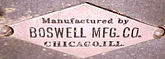 |
BOSWELL MFG. CO. American manufacturer of magic lanterns, settled in Chicago. |
|
BOULANGER, F. French magic lantern and slide manufacturer. (1883-1885) |
||
BOWEN, THOMAS MICHAEL English optician and slide maker, Market Place, Manchester. By the late 1850s the firm was trading in the name of Mrs Mary Bowen, presumably Bowen's wife or widow. (1850s-1870s) |
||
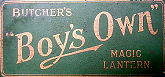 |
BOY'S OWN MAGIC LANTERN The popular English youth magazine Boys Own Paper brought out a special magic lantern in three slightly different models. Supplied by Butcher & Sons. (c. 1910) |
|
BRACHER, EDWARD British daguerreotypist, working in Oxford. Teacher of the photographer and manufacturer of lantern slides Henri W. Taunt. (c. 1860s) |
||
BRAHAM, JOHN English optician and optical instrument maker who dealt in magic lanterns. In 1828 he took over the business from his father-in-law. |
||
BRANDER, GEORG FRIEDRICH German scientific instrument maker in Augsburg with an international clientele and reputation. (c.1750-1783) |
||
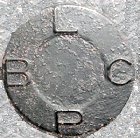 |
BRENKERT LIGHT PROJECTION Co. Detroit, Michigan. American manufacturer of magic lanterns, maker of the Brenograph, a large double lantern, arranged vertically, that was popular for many years through the 1920 to the 1950s. Trade mark B.L.P.C. (c.1920-1950s) |
|
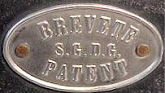 |
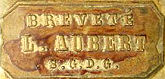
BREVETÉ S.G.D.G. Though many magic lanterns of French origin bear a small plaque 'Breveté S.G.D.G.' (or Brevete without the accent as most sellers write it) or have this text stamped somewhere on the body, this is not a trade mark of a manufacturer. The abbreviation means 'Sans Garantie Du Governement' (Without any guarantee from the Government) and was by law required to be stated on all objects with a legal patent from 1844 until 1968, especially those manufactured for export. Some French manufacturers produced magic lanterns and other optical equipment without stamping their own brand name on them, but they always did have to stamp 'Breveté' and 'SGDG' somewhere on the object. |
|
BRIGGS American family of lanternists, slide painters and manufacturers. Daniel Briggs started painting slides and selling them in 1850. He produced photographic collodion slides by the Archerotype process. Later the firm became C. (Caspear) W. Briggs and Co. in Philadelphia. Slides were made from stock negatives and coloured by hand. (1850-1930s) |
||
BRODIE & MIDDLETON English firm of artist's colourmen, established in 1840 in Long Acre, London. The firm is of special interest to collectors for their publication of approximately 400 outline slides, intended to be coloured by the purchaser. Charles Middleton also published some small books. (See also Do-it-yourself magic lantern slides) |
||
BROWNING English family of lantern makers, London. The business was operating under several names (Spencer, Browning & Rust; Spencer, Browning & Co.). (1782-1900) |
||
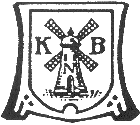 |
BUB, KARL Karl Bub, Nürnberg, Germany. Toy maker. Trademark: K.B.N. Though the Bub company, founded in Nuremberg in 1851, is known to have produced items in collaboration with Carette, and it is reasonable to assume that this cooperation would have included the production of magic lanterns, there is no evidence of Bub manufacturing magic lanterns. |
|
BUCHMAN, E. German manufacturer of magic lanterns, active in the 1890s at Kupferschmiedstrasse 20, Breslau. |
||
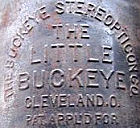 |
BUCKEYE STEREOPTICON Co. American manufacturer of magic lanterns, marked "The Little Buckeye - The Buckeye Stereopticon Co., Cleveland, O. Pat. Applied For." |
|
BURGOYNE, BURBIDGES & SQUIRE English druggists and chemists, also reselling slides. Their slides were probably made by other manufacturers and resold under their own label. Slides are identified by the company name stamped into the wooden frames. (1867-c. 1870) |
||
BURON French optical instrument maker in Paris during the 1790s, selling magic lanterns and other optical instruments. (1790s-1856) |
||
|
BUSCH Emile Busch A.G., Optical industry, Ratheno, Germany. |
||
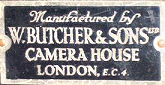 |
BUTCHER & SONS, W. Well-known English supplier of magic lanterns and slides, established at Blackheath, London, in 1866. By 1895 the firm was advertising using the 'Primus' trade mark. The business produced the famous Primus Junior Lecturers Series. In 1915 they joined manufacturing facilities with Houghtons Ltd. that lead to the forming of Houghton-Butcher Ltd in 1926, and in 1930 it became Ensign Ltd. |
|
|
B.W. Trademark of Gebrüder Bing, Nuremberg. |
|
|
|
||
 |
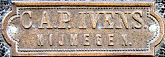
CAPI Dutch photo technical office CAPI (trade name of C.A.P. Ivens & Co). Established and settled in Nijmegen, the Netherlands. Branches in Amsterdam, Groningen and The Hague. C.A.P. was the father of the well-known film-maker Joris Ivens. The firm published al lot of interesting catalogues of magic lantern slides.
|
|
CARBUTT, JOHN Manufacturer of 'Carbutt's Gelatino-Albumen Plates, made on thin crystal glass for Lantern Slides', Dry Plate Works, Wayne Junction, Philadelphia USA. |
||
  |
CARETTE, GEORGES French manufacturer of tin toys and magic lanterns. Carette learned the making of fancy toy magic lanterns through visiting the factory of August Lapierre. With the help of a wealthy Bavarian hop merchant he founded his own toy company Georges Carette & Co in Nuremberg, Germany, were he was among the first to make electric toy tram-cars. At the outbreak of World War I, the Frenchman Carette left Germany for Paris. His company was seized as alien property and ceased trading in 1917. (1886-1917) (See also: Magic Lanterns Georges Carette) |
|
CAROLY, J. French lanternist, conjurer and equipment maker who started a shop in Paris were he dealt in optical and magical lantern equipment. (1896-1900s) |
||
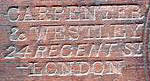 |
CARPENTER & WESTLEY Well-known British manufacturer of magic lanterns and lantern slides with an exceptional quality. In 1826 Philip Carpenter moved to London, were he started his business. He was the inventor of the copper-plate slides, a system for multiple production of magic lantern slides. After his death in 1833 the business was continued by his sister Mary, together with William Westley and from 1835 their business was called Carpenter & Westley. (1826- ) |
|
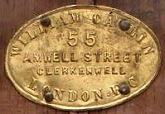 |
CATLIN,
WILLIAM William Catlin of 55 Amwell Street, Clerkenwell, London. |
|
CHADBURN English family of magic lantern and optical instrument makers, based in Sheffield and later in Liverpool. (1816-1900s) |
||
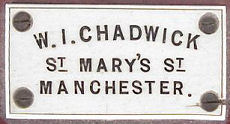 |
CHADWICK, W.I. English manufacturer of magic lanterns, active in Manchester. |
|
CHASSERAUX, EMILE French lantern and cinematograph maker. Filed a number of patents for several designs for street lamp advertising lanterns, which projected their advertisements on to a screen or on to the pavement. He also patented the 'Luminograph', a reversible cinematograph camera. (1890s) |
||
CHATHAM PEXTON & Co. English lantern and slide retailer in London. In the 1890s the firm was a minor producer of Life Model slides, including 'Father come home', a temperance story. (1874-1900) (see also: The Bottle) |
||
CHEVALLIER, JEAN-GABRIEL AUGUSTIN French optical and scientific instrument maker in Paris, from 1796. He sold, among other things, magic lanterns intended for the effects of the Phantasmagoria, like a skeleton emerging from its tomb and a device to produce the sound of thunder. (1796-1810s) |
||
CHICAGO PROJECTING Co. American photographic retailers in Chicago, Illinois. (1900s-1920s) |
||
CHICAGO TRANSPARENCY Co. American manufacturer of magic lantern slides, active at 84 Adams Street, Chicago, Illinois. |
||
CHILDE, HENRI LANGDON English slide painter. He claimed to have invented dissolving views and the chromatrope and was a partner in the firm of Childe & Doubell. |
||
CLAPHAM COMPANY, The A.J. American slide dealer in New York which in 1912 released a set of slides 'The Titanic Disaster'. |
||
CLAUDET A.F.C. Claudet, optician in Paris, Rue l'Université 26. |
||
CLÉMENT ET GILMER (C & G) Since April 1887 Gaston Clément and Georges Arthur Gilmer had been associated with the French manufacturer of projection equipment Arthur Laverne, who sold them his business in April 1890. In 1896 they made the Vitagraphe, a cinematograph using 35mm film. Around 1910 Clément continued alone in the cinema trade, opening a new shop in Paris. (1890-1910) |
||
COLLINS, C.W. English instrument maker, closely associated with the Royal Polytechnic Institution, London. He build for the institution six giant lanterns with 10-inch diameter condensers. He sold dissolving views and was probably one of the first to make chromatropes for the commercial market. |
||
COLT & Co., JAMES BENNET American lantern manufacturer, active in New York. Their famous 1893 Criterion model was used by the Metropolitan Museum as well as many other institutions. After 1900, when a fire destructed the factory, Colt gradually gave up the production of lanterns to concentrate on acetylene generators and lighting systems. Around 1910 the lantern division was taken over by P. Keller & Co. and by 1930 the firm had become a division of the Union Carbide and Carbon Co. |
||
CONSTANT, C. English slide painter. Probably the one who painted the original of the world famous mechanical slide of 'The Man Swallowing Rats'. |
||
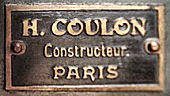 |
COULON, HENRI FRANÇOIS French lantern manufacturer and inventor who patented 'La Petite Parisienne', a lantern capable of projecting both glass slides and opaque images. After some improvements this lantern and its five wick lamp were manufactured and marketed by Clément et Gilmer. (1882-1914) |
|
COX English family of optical instrument, lantern and slide dealers, London (1765-1901) |
||
CUFF (or CUFFE), JOHN English optician and optical instrument maker, known to have sold magic lanterns. (1731-1770). |
||
|
|
 
 |
©1997-2021 'de Luikerwaal' All rights reserved. Last update: 11-09-2021. |
 
|